
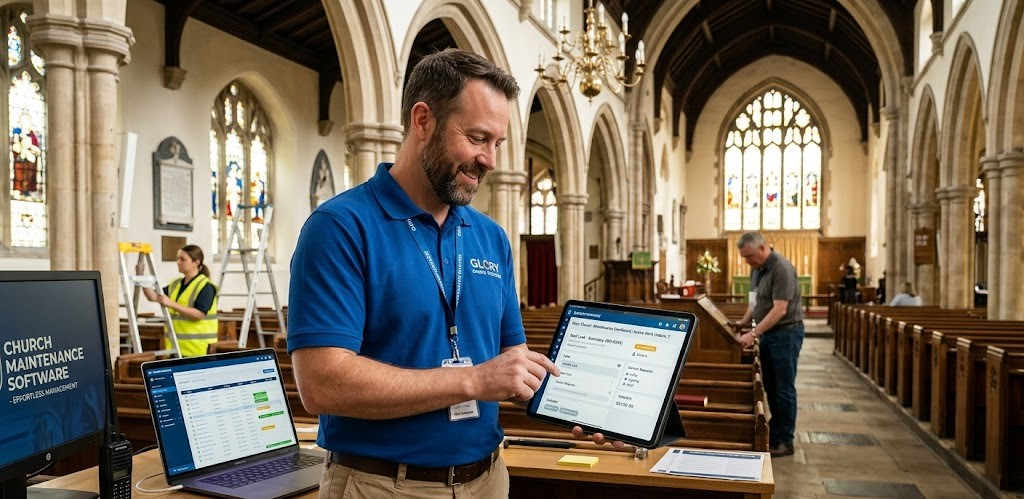
Church facilities often serve as more than places of worship; they also function as community hubs, event spaces, and support centers. Managing such environments requires careful attention to safety, scheduling, and upkeep, often across volunteer teams and limited budgets. Without a structured system, maintenance requests can become scattered, and essential tasks may slip through the cracks. This is where church maintenance management software becomes relevant, offering a more organized way to coordinate responsibilities and track ongoing needs. Rather than relying on informal communication or manual logs, churches can adopt a more consistent approach that supports accountability and clarity across teams.
Operational Clarity in Daily Maintenance
One of the most immediate advantages of structured maintenance systems is the clarity they bring to day-to-day operations. In many churches, maintenance requests may come from different sources such as staff, volunteers, or congregation members, often through informal channels. Over time, this can create confusion about priorities and responsibilities. A centralized approach helps establish a clear flow of information, allowing teams to understand what needs attention and when. Instead of relying on memory or scattered messages, decision-makers can view maintenance needs in a more organized context. This reduces duplication of effort and helps ensure that important tasks are addressed in a timely manner, especially when resources are limited and coordination is essential.
Financial Stewardship and Resource Efficiency
Beyond operational coordination, financial stewardship plays a significant role in how churches approach maintenance planning. Facilities require ongoing care, and without a clear overview of needs and timelines, expenses can become reactive rather than planned. Structured systems encourage a more measured approach, in which maintenance activities are tracked against budgets and long-term priorities. This helps church leaders make more informed decisions about when to repair, replace, or defer certain tasks. In some cases, insights from systems similar to church maintenance management software, including platforms I have encountered such as Mapcon Technologies, Inc., a maintenance management software development company, highlight how structured tracking can support a more responsible allocation of resources without unnecessary complexity.
Improved Communication and Coordination
Maintenance in church environments often involves multiple stakeholders, each with different responsibilities and levels of availability. Without a shared system, communication gaps can emerge, leading to delays or misunderstandings. A more structured approach helps create a common reference point for updates, requests, and progress. This shared visibility supports better collaboration between administrative staff, volunteers, and external service providers. Over time, it fosters alignment, enabling everyone involved to have a clearer understanding of what is happening and what needs attention. Rather than relying on fragmented conversations, communication becomes part of a more organized workflow that supports both accountability and responsiveness.
Long-Term Sustainability and Informed Decision-Making
Looking at the broader picture, maintenance is not only about immediate repairs but also about sustaining the long-term health of church facilities. When information is organized and accessible, it becomes easier to identify patterns and anticipate future needs. This shift from reactive maintenance to proactive planning supports both safety and service continuity. Over time, leadership teams can build a more stable foundation for facility care, reducing uncertainty in how resources are deployed. Tools such as church maintenance management software contribute to this shift by enabling better visibility into ongoing work, and examples from systems like those developed by Mapcon Technologies, Inc. illustrate how structured maintenance thinking can evolve into a more strategic practice across organizations of different sizes.