
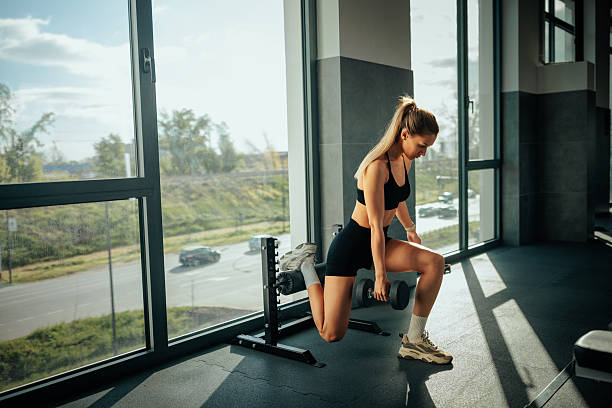
Core strength is often associated with ab exercises, yet it is deeply influenced by how the body stabilizes during full-body movements. Among these, lunges stand out as a practical and effective option because they require balance, coordination, and sustained engagement of the abdominal and lower back muscles. In Santa Barbara, where fitness culture blends outdoor activity with mindful studio training, lunge variations have become a consistent part of core-focused routines. Rather than isolating muscles, these movements train the body to work as an integrated system, which is essential for both athletic performance and everyday mobility.
Exploring the Lunge Workout in Santa Barbara Studio for Core Engagement
The idea of the top lunge workout in Santa Barbara studio often points to structured sessions that emphasize control rather than speed. In these settings, lunges are frequently paired with breathing techniques and slow-tempo transitions, which require the core to stabilize more actively. Forward lunges, reverse lunges, and lateral variations all contribute differently to core engagement, especially when performed on unstable or soft surfaces. During a recent visit to a local Pilates-focused environment like SOLOS Pilates Studio Fitness Goodland, the emphasis on alignment made it clear how subtle posture adjustments can significantly increase abdominal activation without adding extra load.
Why Lunges Activate the Core More Than Expected
Although lunges are commonly viewed as lower-body exercises, they require continuous core stabilization. Each step forward or backward shifts the center of gravity, requiring the abdominal muscles to resist unwanted rotation or collapse. This is particularly noticeable when movement is slowed down intentionally, as it removes momentum and forces the body to control every phase. Over time, this type of training improves postural endurance, which carries over into activities such as walking, running, and prolonged standing. The controlled instability created during lunges makes them especially valuable for core development.
Variations That Enhance Core Challenge and Balance
Different lunge variations can shift the emphasis from basic strength to deeper stability work. For example, walking lunges introduce forward momentum that requires continuous core correction, while reverse lunges reduce joint strain while still maintaining strong abdominal engagement. Side lunges add another dimension by challenging lateral stability, which is often overlooked in traditional workouts. When combined in a sequence, these variations encourage the core to adapt rapidly, improving both strength and coordination. This adaptability is one reason lunges remain a foundational movement in many structured fitness programs.
Integrating Mindful Movement Into Lunge Training
In Santa Barbara’s fitness spaces, there is often a focus on mindful movement rather than purely repetitive exercise. This approach fits naturally with lung training, where breathing and posture awareness can significantly alter the effectiveness of each repetition. Engaging the core during inhalation and exhalation helps maintain stability and prevents unnecessary strain on the lower back. Studios such as SOLOS Pilates Studio Fitness Goodland often reflect this principle, where movement quality is prioritized over quantity, allowing participants to develop better control and awareness through each lunge pattern.
Long-Term Benefits of Core-Focused Lunge Practice
Consistent practice of lunge exercises leads to improvements that extend beyond aesthetics or isolated strength gains. A stronger core enhances balance, reduces the risk of injury, and supports more efficient movement patterns in daily life. Over time, individuals often notice better posture and reduced fatigue during physical activity. In a community like Santa Barbara, where outdoor living and active lifestyles are common, these benefits align naturally with everyday needs. By maintaining a steady focus on controlled lunge training, the core becomes more resilient, supporting both performance and long-term physical well-being.